


Preparing to Design Robots for Social Contexts
By Clint Andrews on April 22nd, 2022 in Articles, Artificial Intelligence (AI), Editorial & Opinion, Ethics, Human Impacts, Magazine Articles, Robotics, Social Implications of Technology, Societal Impact
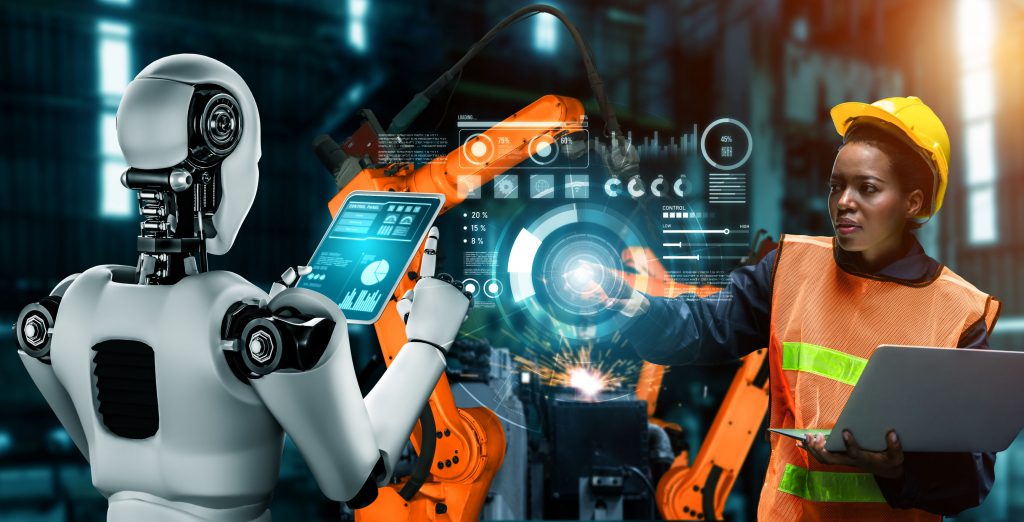 iStock/Fritz Jorgensen
Clinton J. Andrews
Educational programs in robotics have focused mostly on developing science, technology, engineering, and math skills, with recent extensions into the arts [1]. This focus has been entirely appropriate, until recently. Successful roboticists have been generalists with a specialty [2] whose careers involve both thinking and doing. Thinking (“investigative”) and doing (“realistic”) are personality traits that, when strongly correlated, predict success in computer science, engineering, and, by interpolation, robotics [3]. Industry voices confirm that roboticists need skills in systems thinking, a programming mindset, active learning, mathematics, science or other applied mathematics, judgment and decision making, good cross-disciplinary communication, technology design, complex problem solving, and persistence [4]. This list is adequate for many applications of robotic autonomous systems (“robots”).


Comments